e-Golf: Portable Charger, Wallbox and Electricity Tariff
This translation was generated automatically.
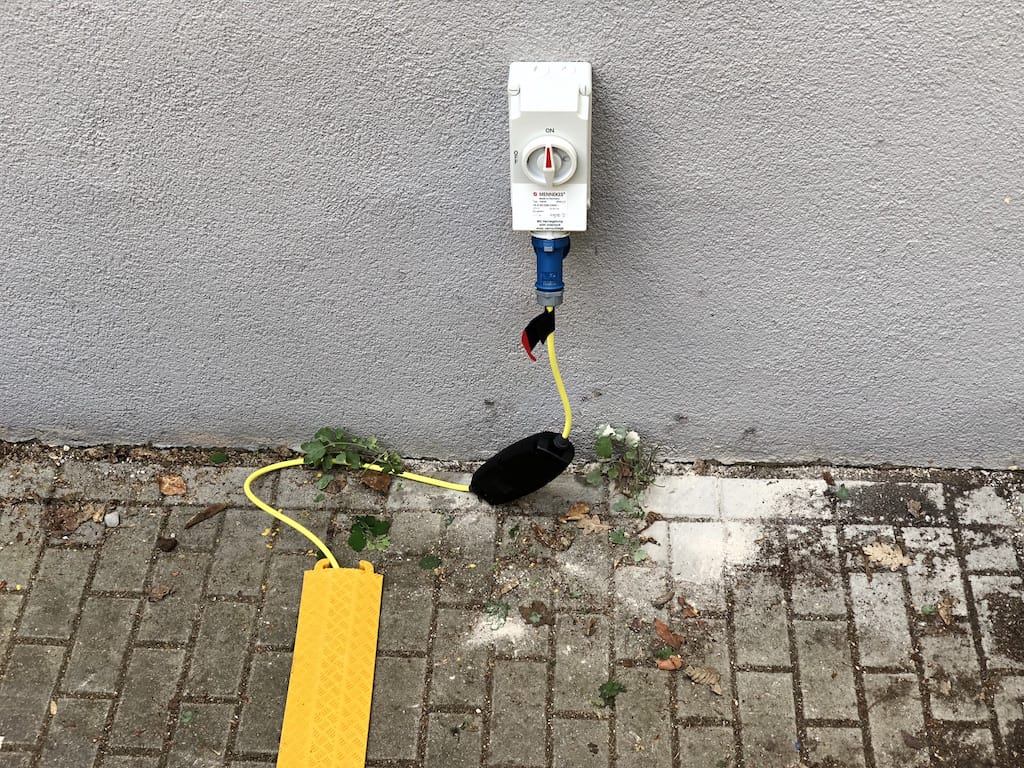
If you ask a car dealer or electrician to install a charging point, you may get a very expensive quote that puts you off. I want to describe the inexpensive installation I chose, which also takes the conditions at this house into account. Your mileage may vary; this setup may not work for your house or car. Renault Zoes in particular are apparently fussier.
All prices in this article are net. Consumers in Germany should add 19% VAT.
The car is a second-generation e-Golf, which can charge from AC on one or two phases at 16A: 3.6kW or 7.2kW. With 31.5kWh of usable battery capacity, a charge takes roughly 9 or 5 hours, respectively.
Electrical installation
The publicly accessible parking space at our rented house is near the basement storage unit. One phase for the lights and a Schuko socket come into the unit, and the socket is connected to my meter. The house's main supply is undersized. Since an upgrade or even a multi-phase connection makes no sense here, I have to work with the single phase from the basement.
The electrician branched off before that socket and installed a switchable, lockable CEE outlet on the outside wall. It took about 90 minutes and cost €122 the invoice is still outstanding. A padlock should at least deter opportunistic electricity thieves for a moment. You can sometimes find the Mennekes outlet for €100 despite its much higher list price. A considerably cheaper model is available from the Italian manufacturer Gewiss.
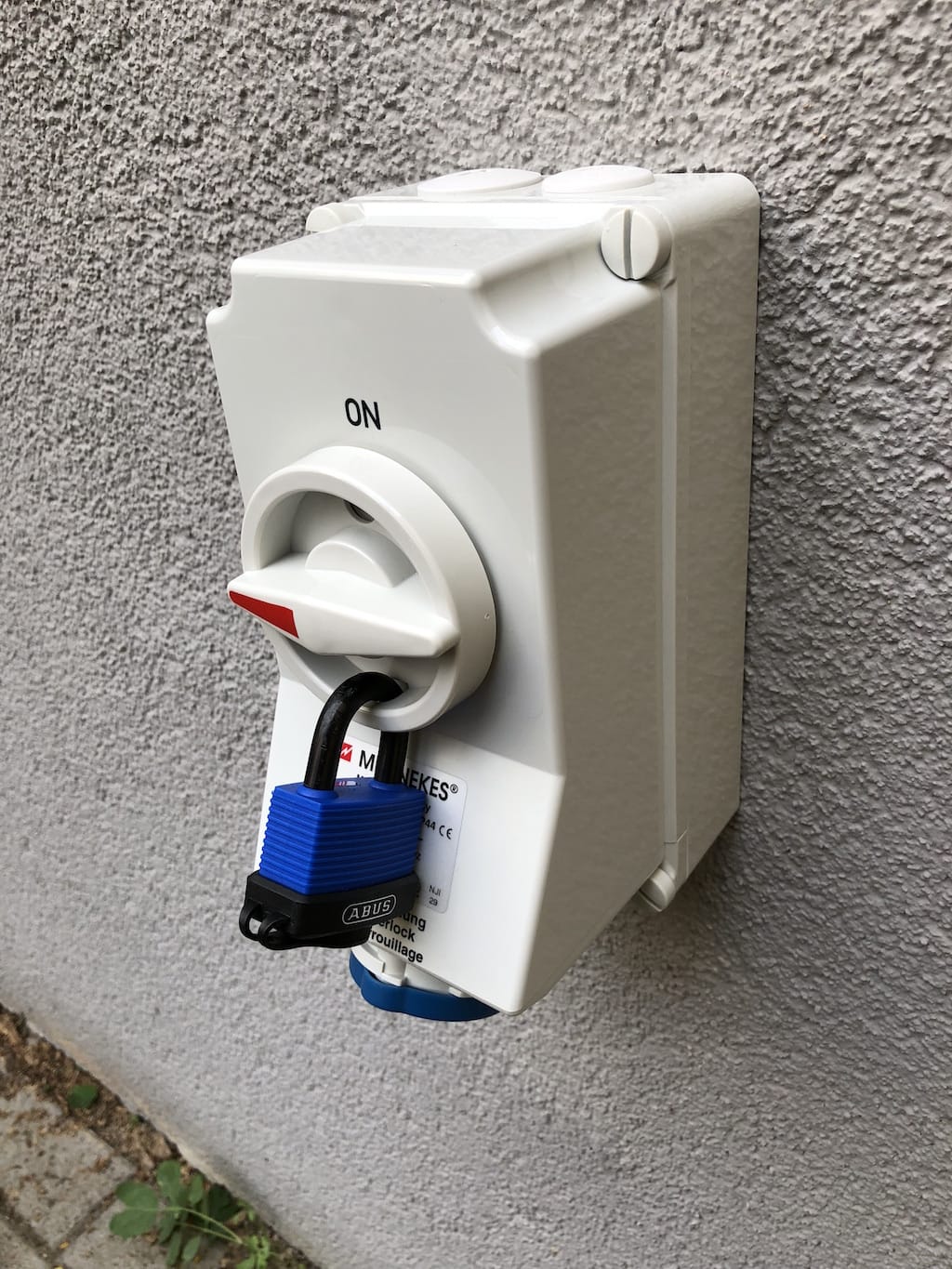
A switch inside the basement storage unit was the alternative, but every time I used it, three doors and two or three locks would get in the way.
Portable charger
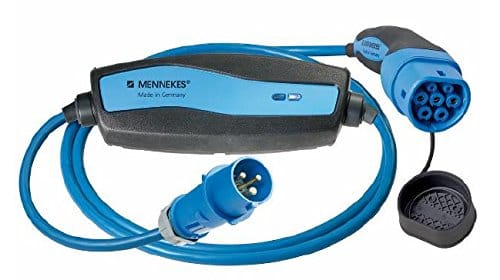
As Volvo spare part 32208594, you can get a 16A Mennekes portable charger (ICCB) with a blue CEE plug and 7.5m cable for around €300–400. Slightly cheaper 12A or 13A Schuko chargers are available from BMW or Mercedes. Since the Schuko socket already gets more than lukewarm at 10A, I wanted a CEE outlet rated for a continuous 16A load. Along with the other charging cables, the charger fits under the false floor in the Golf's trunk if you did not order the sound system.
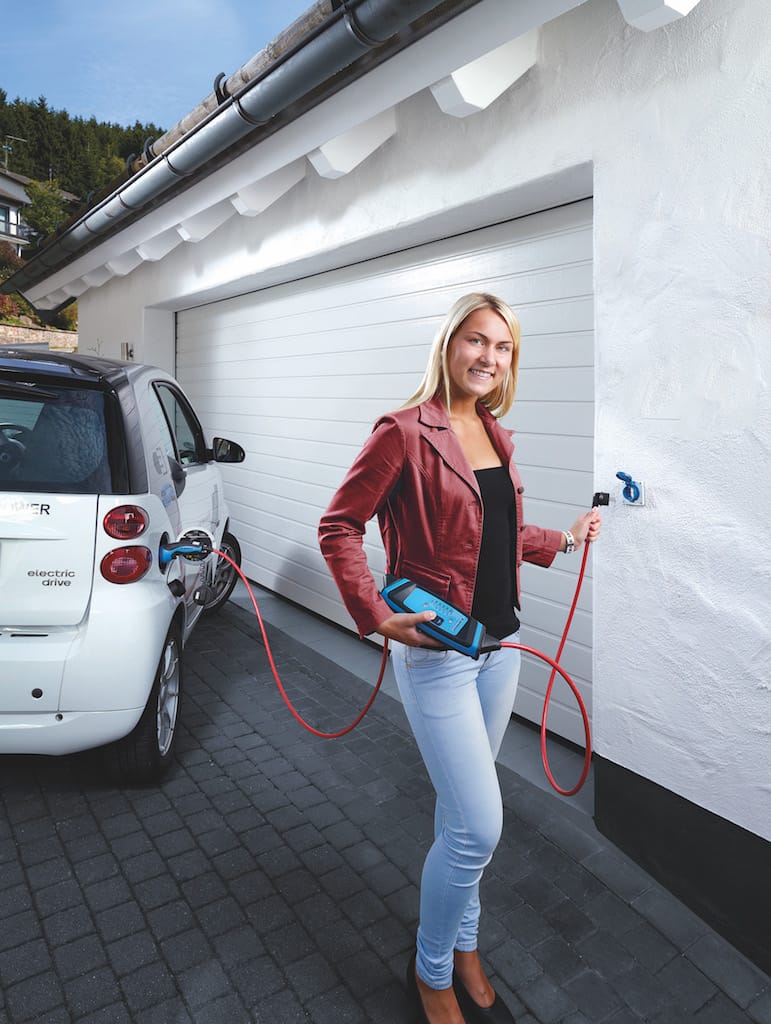
For comparison, similar portable charging options such as the go-e Charger (about €600) or NRGKick (about €800) are more versatile and can deliver more power from other connections, but they cost many times more. There is still relatively little competition, though that should improve over time. Webasto, for example, announced a small portable solution for next year.
There are more technical details in Bits und so #571 (in German). Since Type 2 is essentially a glorified three-phase socket with a little protection and control circuitry, I do not think the more expensive units justify their prices. That episode also talked me out of the eBay DIY boxes, especially since we would be using ours entirely outdoors.
No wallbox
A fixed wallbox connected to the outdoor socket would have been possible, but not much more practical or faster. It would have cost another €400–500, and I still would not have had a 16A solution for trips. The ability to lock a wallbox with a key or chip can quickly push up the price too.
The likely choices here would have been the Tesla Wall Connector or the fixed Webasto unit. Tesla's simple built-in load sharing is particularly interesting if you are planning a second charging point. If Tesla will not sell the wallbox for another car, send a Tesla owner to the shop. Pro tip for e-Golf drivers using a Tesla wallbox: if charging does not start, press the small reset button on the side.
This portable charger should be enough for many years, even beyond the Golf, and is flexible on trips too. If I move, I can remove the outlet and lose only the electrician's fee. I can occasionally charge at relatives' three-phase outlets with an adapter from red 16A CEE to blue 16A CEE. Their 10A charger was an obstacle, for example, because the basement door could not be locked overnight during the longer charging session.
Electricity tariff
Originally I expected to charge mostly in public, and despite all the early teething problems that has worked out somehow over the past five months. I have charged at home only about three times. With the VW Charge&Fuel card, a charge including city parking costs around €4; on our usual home electricity tariff it is more like €8. There are also plenty of free fast chargers in Munich, at VW, BMW, Aldi, Ikea and Telekom.
I estimate the Golf will use about 2,000kWh a year for roughly 12,500km. If I do end up charging half of that at home, there is room to save.
Maingau Energie currently has a pretty good offer, with around €400 in new-customer credit for annual consumption of about 4,400–5,500kWh (a little less for lower consumption). After a year, that brings the effective electricity price down by around 35%, making a home charge about €5, or roughly 16–18 cents per kWh. Without the higher overall consumption I would not get such a large discount, so in effect the car's electricity is practically free. The contract also cuts the price on the Maingau charging card from 4 cents to 1.7 cents per minute at some motorway fast chargers.
If you are interested in this tariff and enter my customer number 425377707 on the PDF order form, I get a small referral bonus.